Vultures of the Central Asian Flyway
A regional hub for information on vultures of the Central Asian Flyway, connecting species knowledge, conservation priorities, monitoring tools, projects, guidance and opportunities for coordinated action.
Why vultures matter
Vultures are highly specialised scavengers that play an essential role in healthy ecosystems. By rapidly consuming animal carcasses and other organic waste, they recycle nutrients, help keep landscapes clean and reduce opportunities for disease-causing organisms to spread among wildlife, livestock and people.
Their ecological role is difficult to replace. Where vulture populations decline, carcasses may remain in the environment for longer or become available to increasing numbers of less specialised scavengers, potentially changing ecological relationships and creating additional public-health and livestock-management concerns.
Many vultures travel across large areas and cross national borders during migration, dispersal and seasonal movements. Their conservation therefore depends on cooperation between countries, conservation organisations, researchers, veterinary authorities, energy companies, local communities and other stakeholders.
Vultures of the Central Asian Flyway
The Central Asian Flyway links breeding, migration and wintering areas across a vast region extending from the Arctic and Central Asia to South Asia and the Indian Ocean. Vultures use mountain systems, open steppe, deserts, agricultural landscapes, migration corridors and other habitats distributed across this flyway.
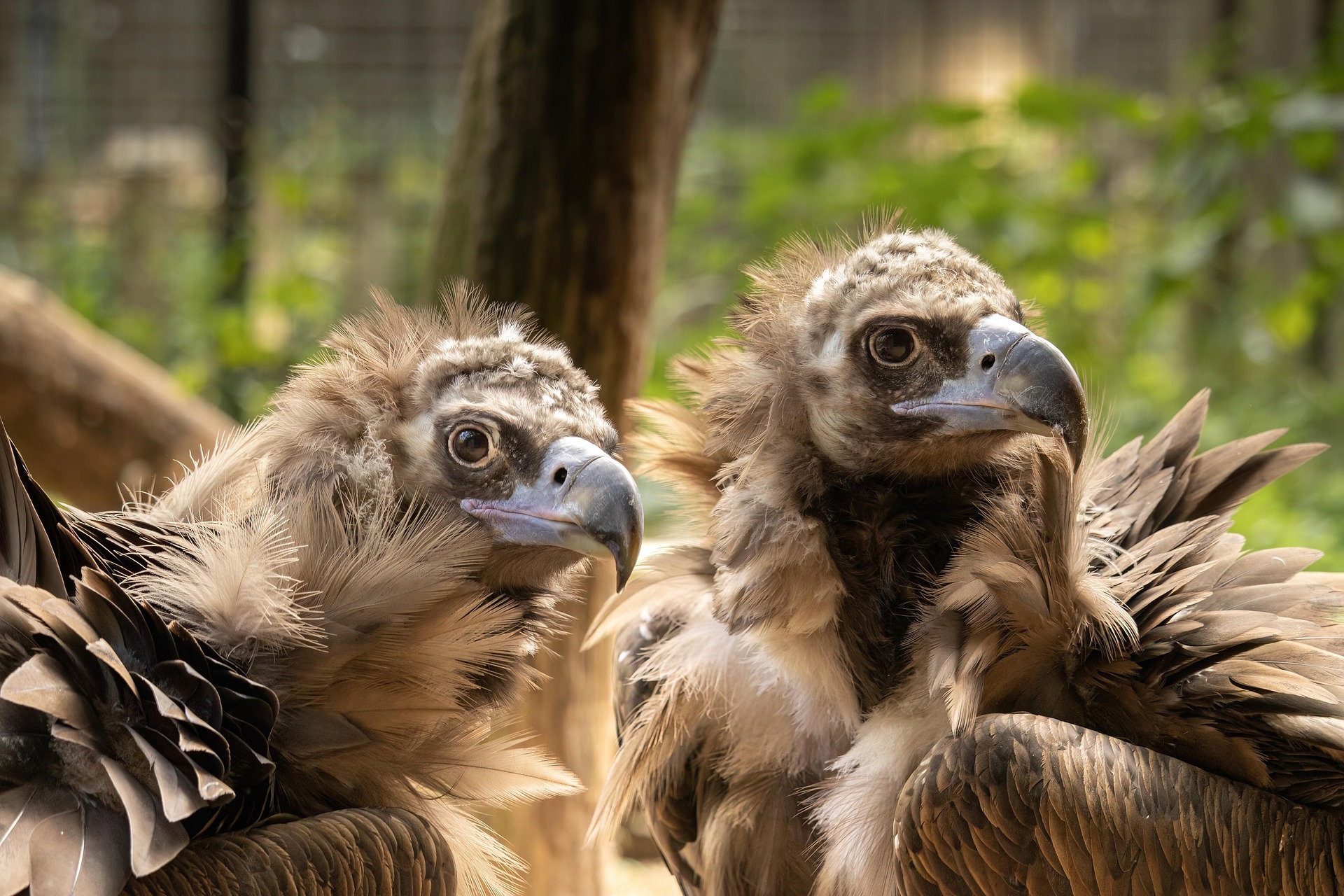
Species of particular relevance to the wider region include the Egyptian Vulture, Cinereous Vulture, Bearded Vulture, Himalayan Griffon and Griffon Vulture. Different species may be resident, partially migratory or long-distance migrants, and their movements often connect several countries.
The Egyptian Vulture is one important example. Populations breeding in the Balkans, Central Asia and the Caucasus migrate through the Middle East towards wintering areas in Africa. Conserving such populations requires action not only at breeding sites, but throughout the complete migration route.
This portal will progressively connect available CACN species profiles, regional knowledge, monitoring information, important sites, conservation projects and technical resources.
Main threats
Vultures face several interacting threats, whose importance varies between species, countries and landscapes.
Intentional and accidental poisoning, including poisoned bait placed for carnivores and exposure to agricultural chemicals.
Toxic veterinary medicines remaining in livestock carcasses consumed by vultures.
Electrocution on unsafe electricity poles and collisions with power lines, wind turbines and other infrastructure.
Illegal killing, persecution, capture and trade.
Loss, degradation or disturbance of nesting, roosting and foraging habitats.
Reduced or unsafe food availability caused by changes in livestock management, land use and carcass-disposal practices.
Lead and other toxic substances entering the food chain.
Weak monitoring, limited incident reporting and gaps in cooperation between relevant sectors.
Because vultures may gather in numbers around the same food source, a single poisoned carcass or hazardous location can affect several birds and more than one species.
Conservation action
Effective vulture conservation requires coordinated action across the complete flyway.
Priority approaches include preventing wildlife poisoning, promoting vulture-safe veterinary medicines, reducing illegal killing, improving the safety of energy infrastructure, protecting nesting and roosting areas, maintaining safe food availability, strengthening rescue and rehabilitation capacity, and supporting long-term research and monitoring.
International frameworks provide a foundation for this work. The Convention on Migratory Species adopted the Multi-species Action Plan to Conserve African-Eurasian Vultures in 2017. It covers 15 species of migratory Old World vultures and promotes coordinated action across their ranges.
Dedicated flyway plans for the Egyptian Vulture and Cinereous Vulture form part of this wider framework. Their priorities include research and monitoring, protected areas, capacity development, information exchange, cooperation with the energy and agriculture sectors, and stronger public awareness.
Through its Vulture Research and Conservation Working Group, CACN can help connect regional experts, organisations, projects and practical experience and make this information more accessible across Central Asia.
Monitoring and reporting
Reliable monitoring is essential for understanding vulture populations, movements, threats and conservation needs.
Useful information may come from breeding-territory surveys, communal-roost counts, migration monitoring, satellite tracking, ringing and tagging, mortality investigations, rehabilitation records, poisoning reports and observations submitted by local communities and birdwatchers.
CACN’s connected data portals provide several ways to contribute information:
suspected poisoning incidents can be documented through the Wildlife Poisoning Portal;
collisions and electrocutions associated with infrastructure can be submitted through the Bird Collision Portal;
observations of vultures carrying rings, wing tags, leg flags or other markings can be reported through the Marked-Bird Sightings Portal; and
available marking and ringing information can be explored through the Ringing Data Portal.
Sensitive information, including precise nest and roost locations, should be handled carefully and shared publicly only when this does not create additional risks for birds or conservation work.
Important places for vultures
Vultures depend on a connected network of safe places throughout their life cycle.
These may include nesting cliffs and trees, communal roosts, open landscapes used for foraging, traditional livestock-grazing areas, migration bottlenecks, protected areas, rehabilitation centres and locations where safe food is consistently available.
Protecting a nesting site alone may not be sufficient. Birds can travel over large distances while searching for food and may encounter poisoning, unsafe power infrastructure, disturbance or illegal killing far from their breeding territory.
This portal will progressively highlight confirmed sites from the CACN database that are important for vulture breeding, migration, wintering, feeding or monitoring. Sensitive nest and roost coordinates should be generalised or withheld where public disclosure could increase disturbance, persecution or wildlife crime.
Vulture resources and webinars
Webinar – Vultures of the Central Asian Flyway
CACN webinar on Vultures of the Central Asian Flyway.
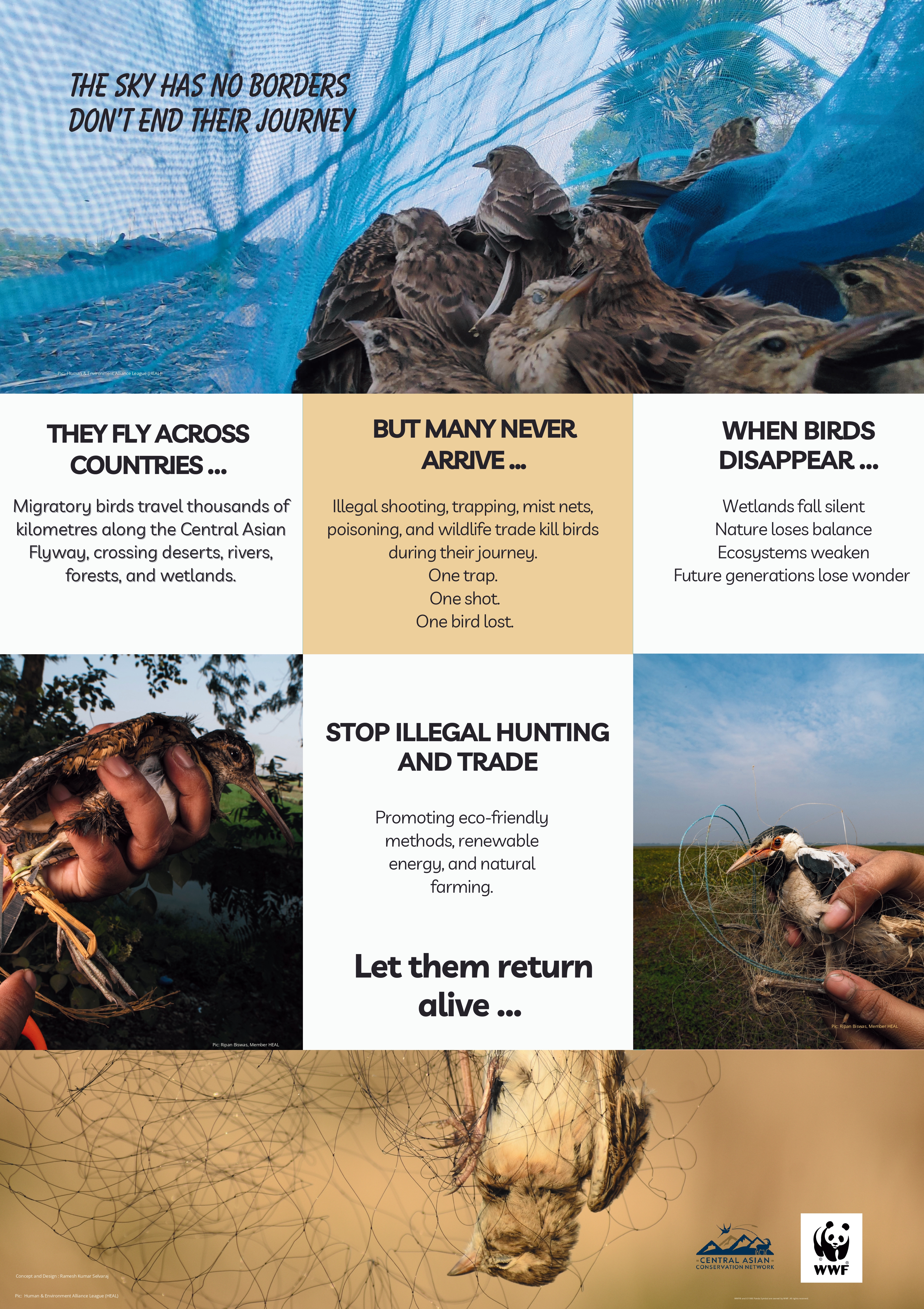
Illegal Killing of Birds
A poster educating about the need to prevent illegal killing of birds in the Central Asian Flyway and beyond.

Webinar: Illegal killing and trade of birds in the Central Asian Flyway
Webinar on illegal killing and trade of birds in the Central Asian Flyway.

Webinar: Green Energy and Birds
CACN webinar on green energy developments and conservation of migratory birds and bats in the Central Asian Flyway.
Monitoring, reporting and international guidance
Wildlife Poisoning Portal
Safety guidance and information for documenting suspected wildlife poisoning incidents.
Bird Collision Portal
Report and explore bird mortality associated with power lines, wind turbines, glass, vehicles and other infrastructure.
Marked-Bird Sightings
Submit observations of vultures and other birds carrying rings, wing tags, leg flags or other identifying marks.
Ringing Data
Explore available ringing, tagging and marking records from participating schemes.
CMS Vulture Multi-species Action Plan
International strategic framework for coordinated conservation of 15 migratory African-Eurasian vulture species.
Egyptian Vulture Flyway Action Plan
Conservation framework for the Balkan, Central Asian and Caucasian populations of the Egyptian Vulture.
Cinereous Vulture Flyway Action Plan
International flyway action plan for the conservation of the Cinereous Vulture.
Vulture conservation contacts
Suspect wildlife poisoning?
Do not touch dead wildlife, suspected bait or chemical containers. Record the location and circumstances from a safe distance and consult the Wildlife Poisoning Portal for reporting and safety guidance.