
Flyway Connect
Follow the remarkable journeys of individually tagged migratory birds across the Central Asian Flyway, discover the science behind their movements, and contribute your own sightings, photographs and field observations.
About Flyway Connect
Flyway Connect is a public engagement initiative and online platform developed by the Central Asian Conservation Network (CACN) and Bird Count India (BCI). It connects people with the remarkable journeys of individually tagged migratory birds.
The initiative brings together researchers, birdwatchers, photographers, nature enthusiasts and local communities. Researchers can showcase selected tagged birds, while visitors can follow their migrations, learn about the science behind bird tracking, report sightings, share photographs and contribute field observations.
By bringing scientists and the public together, Flyway Connect transforms bird tracking data into engaging conservation stories and helps build greater appreciation and stewardship for migratory birds across the Central Asian Flyway.
How to participate
Researchers participating in Flyway Connect share selected tagged birds with the platform. Each bird can have its own digital profile featuring species information, photographs, the story behind the bird, research objectives, migration maps, recent movement updates and conservation significance.
Step 1: Find the tagged bird
Pick a tagged bird by its latest date and time (see the table or below). Note its tag number and colour, click its name for details, and click its latest GPS location to see it on the map. Then search for it at or around that location.
Step 2: Upload to eBird
If you find it, record the sighting on the eBird app straight away. Upload immediately—you can add photographs later. Very Important: Share your eBird checklist with this group account: FlywayConnect
Step 3: Document what you see and hear
Alongside the tagged bird, record the whole site:
Other birds present (including common ones like prinias, mynas, pigeons, crows)
Habitat—mudflat, estuary, swamp, saltpan, wetland, grassland, farmland, riverbank, etc.
Interactions—feeding together, joining a mixed flock, competing for food or space, roosting, or being displaced by another bird
Anything else useful—add it in the eBird checklist comments
Photos are hugely valuable for confirming the sighting and documenting behaviour and habitat — but never wait for a photo before uploading.
!!!Look for the tagged bird → Record it on eBird App → Document what you see and hear → Upload photographs later!!!
A Few Kind Reminders
Watch from a comfortable distance — a calm, well-fed bird is one you’ll get to see set off strong on its big journey.
Visit in small groups and space out your visits, so the birds get plenty of undisturbed time to feed and rest.
Tread lightly on the habitat — stay on paths, avoid sensitive spots, and take your litter home.
If the location is a protected area, do get the required permissions before visiting.
Check with landowners before entering private land.
Keep an eye on the weather and look after your own safety too.
Follow local wildlife and access guidelines.
Any questions?
For further queries, contact [email protected] and/or [email protected]
Meet the Birds and Scientists
Meet the tagged birds and the scientists working to understand and protect them.
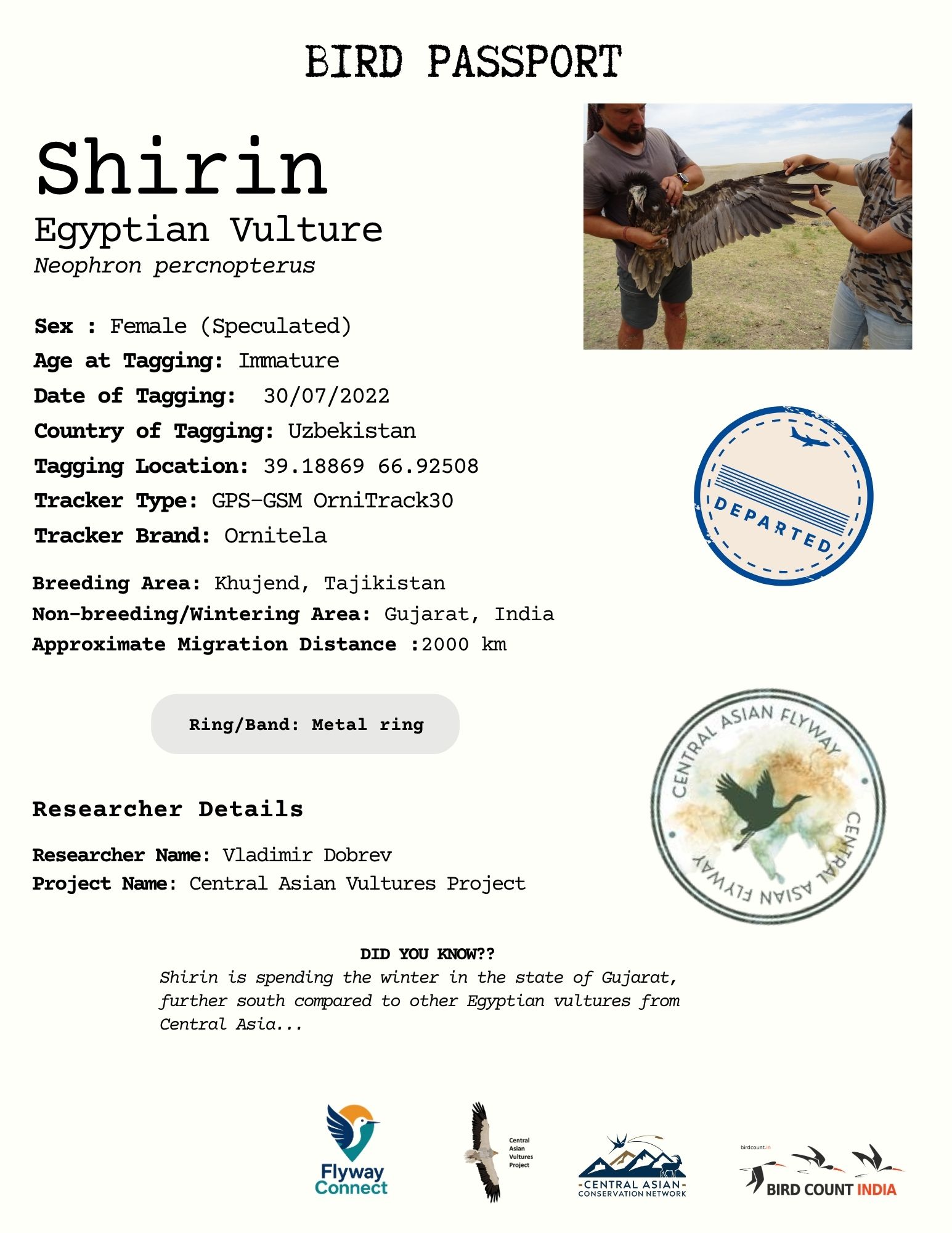 Active
Shirin
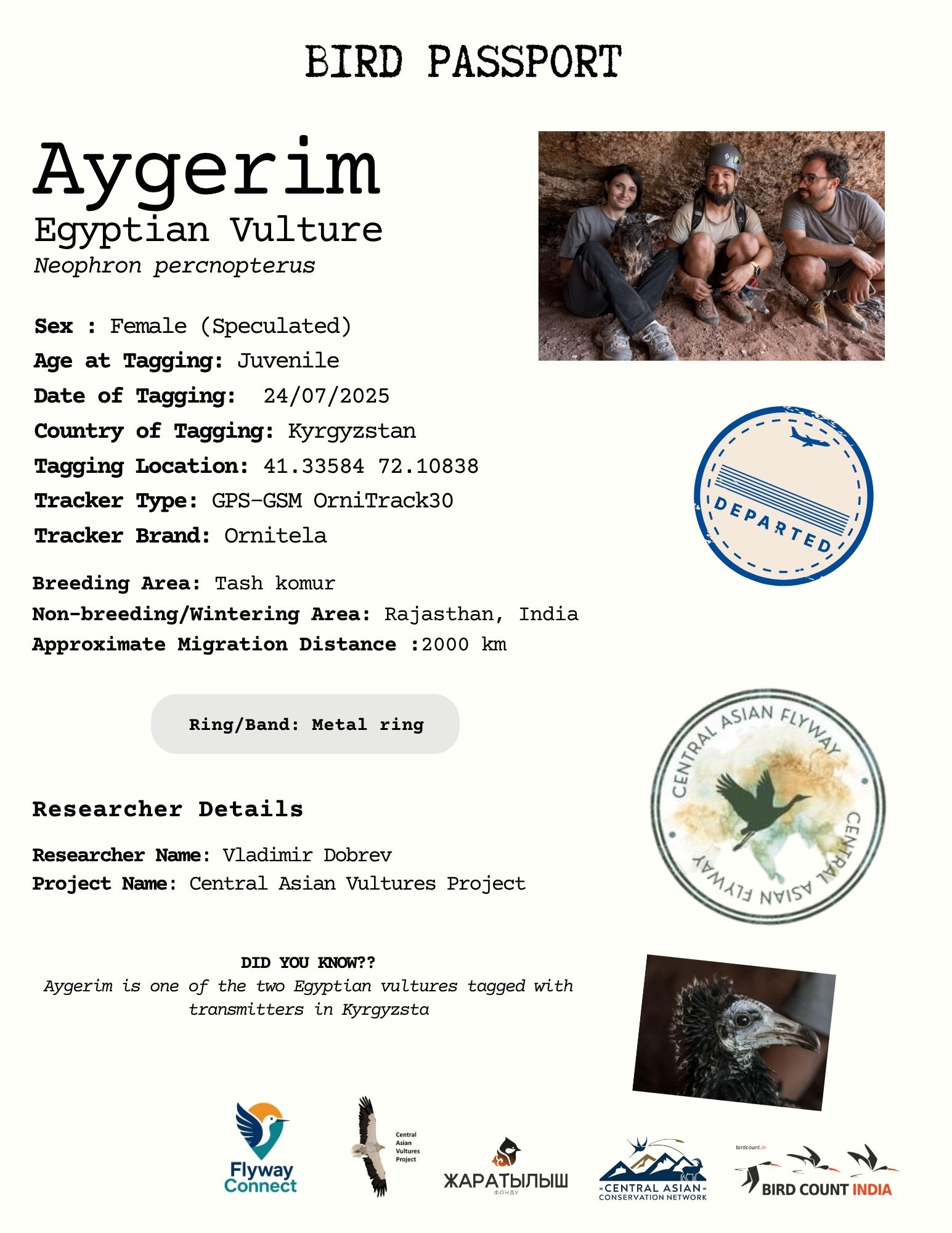 Active
Aygerim
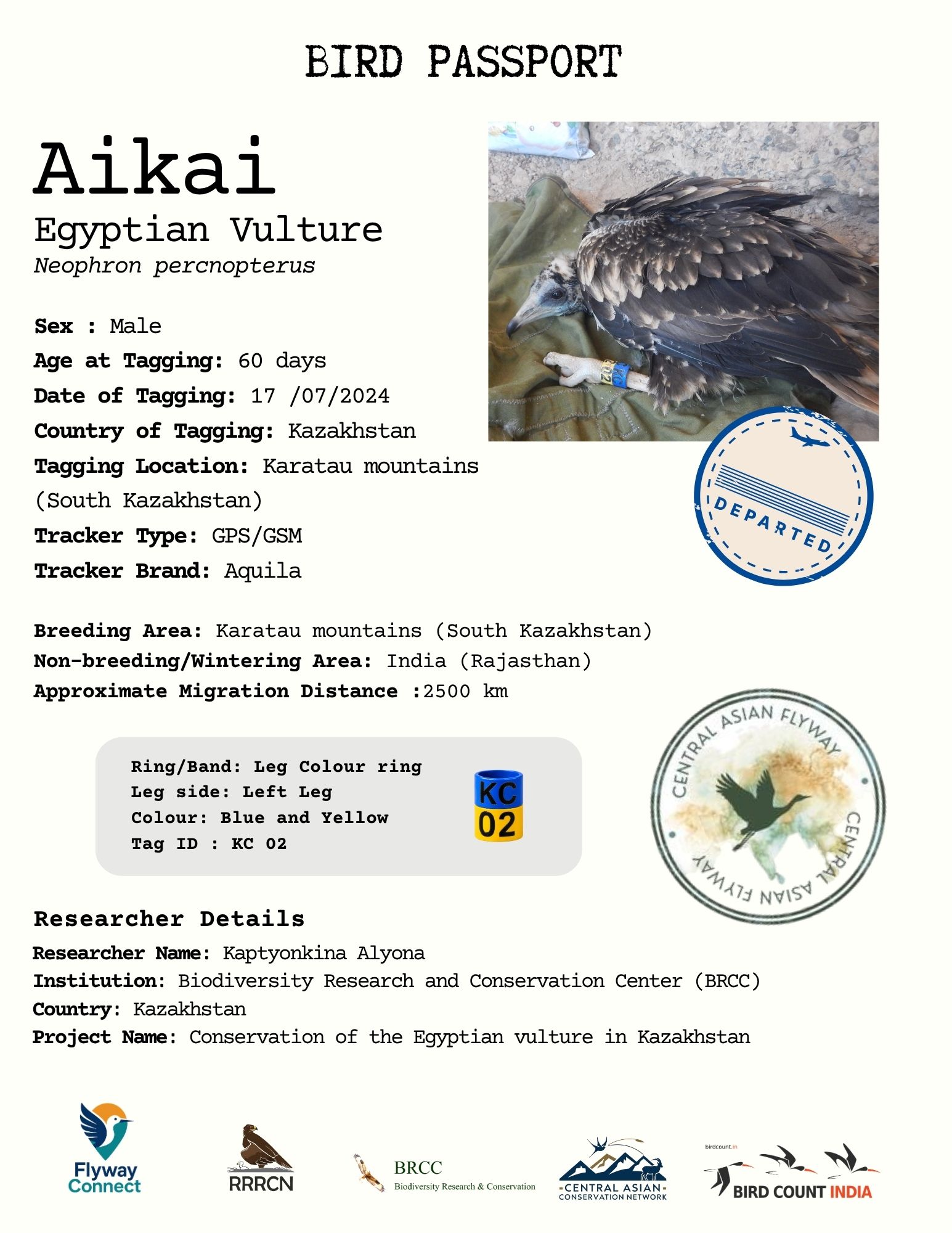 Active
Aikai
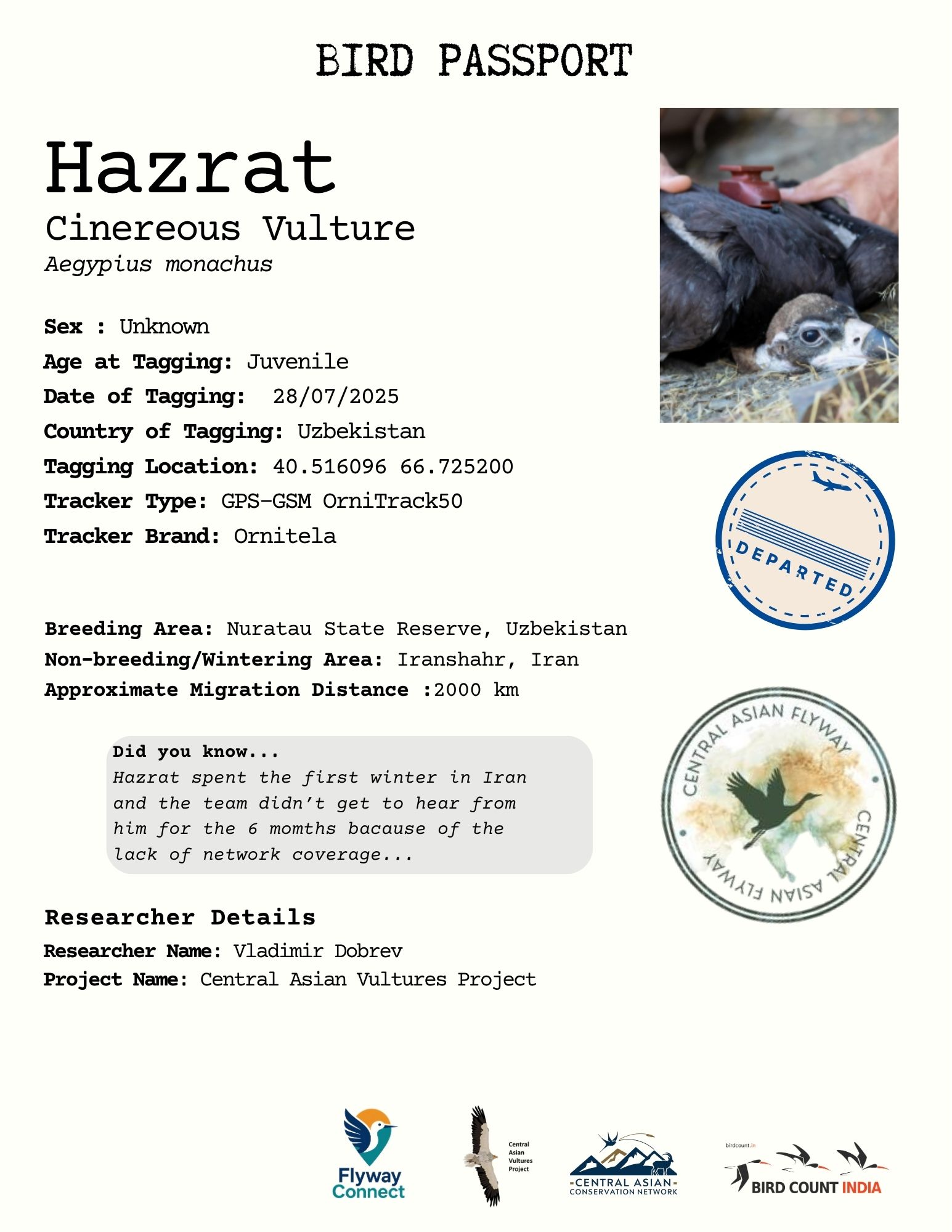 Active
Hazrat
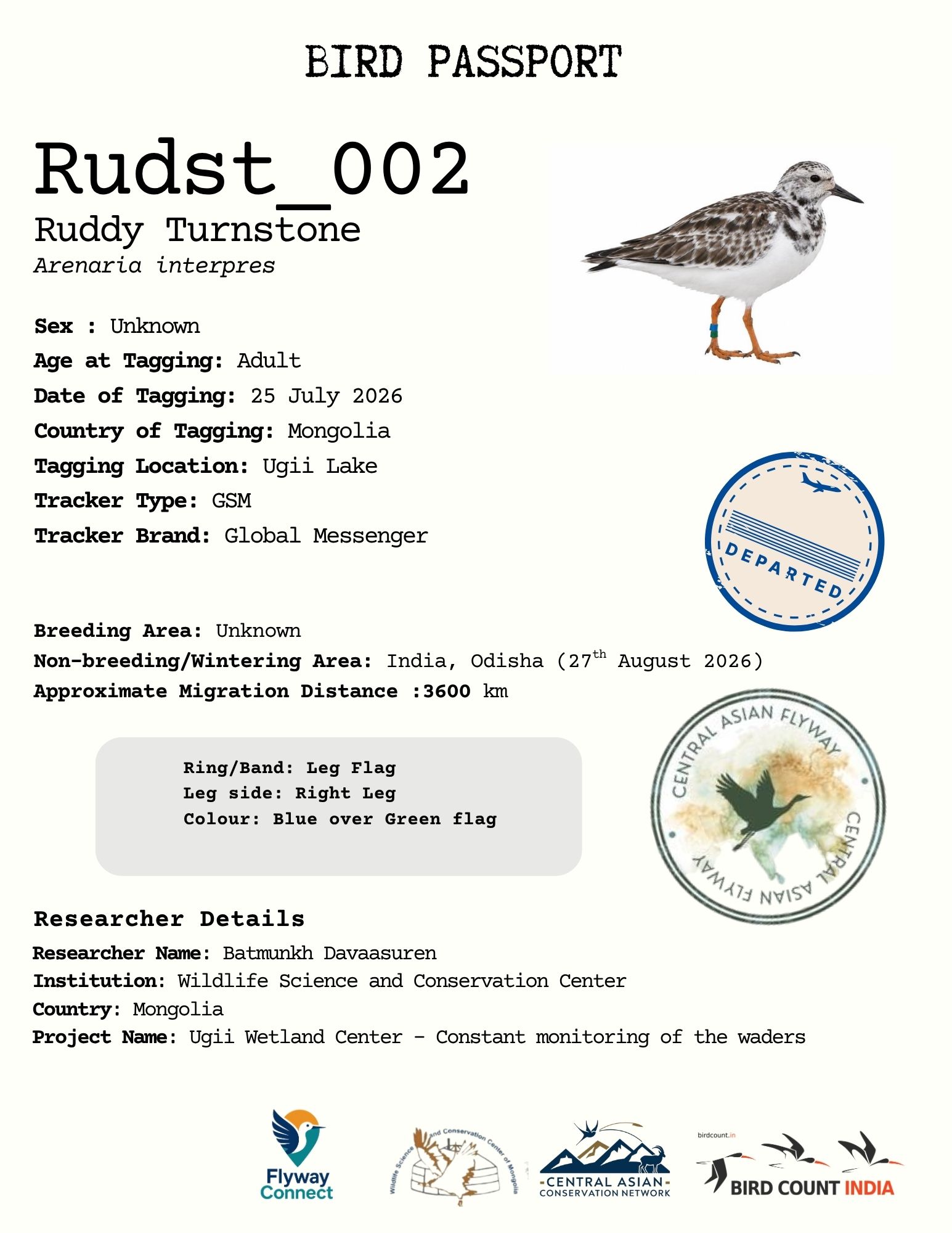 Active
Rudst_002
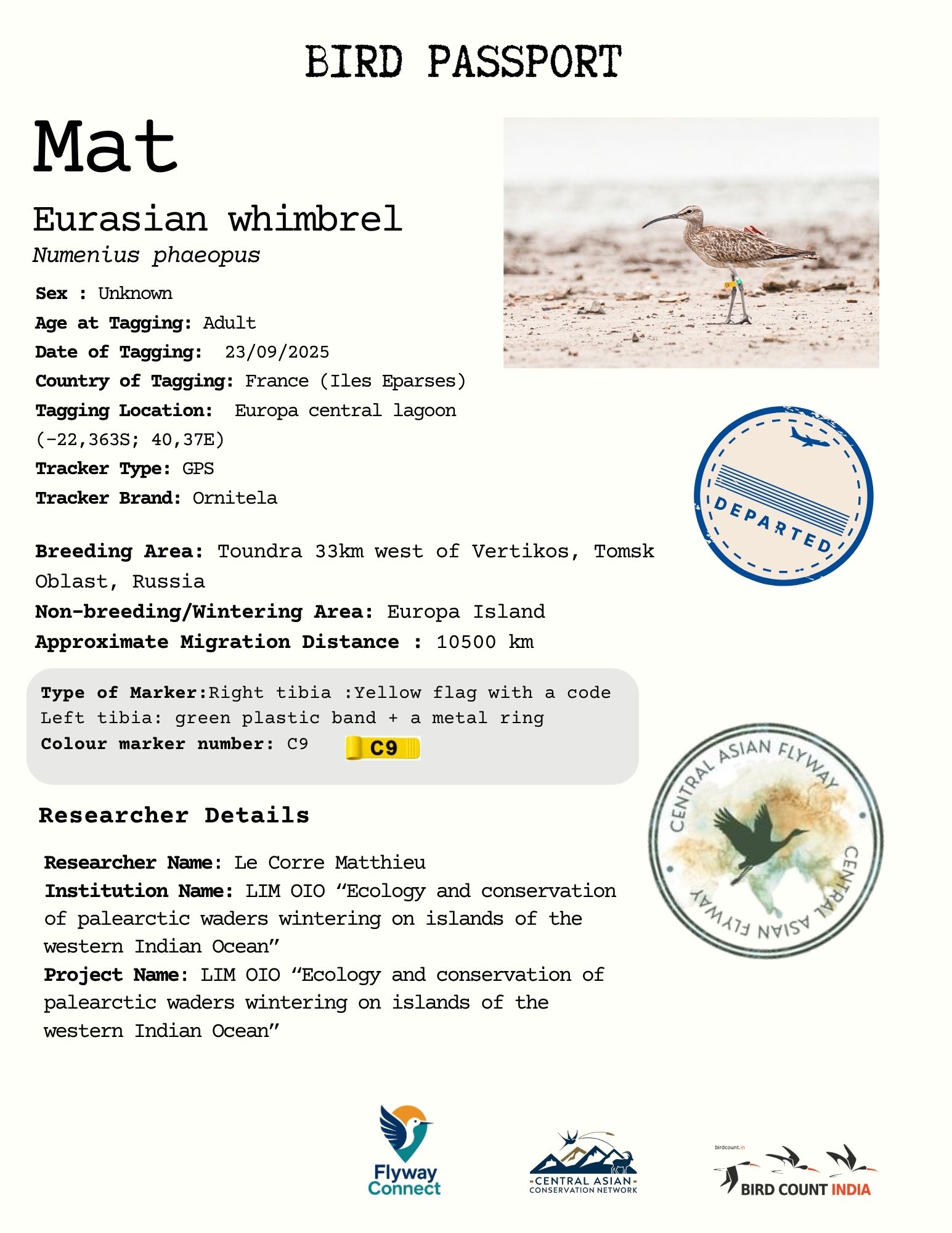 Active
Mat
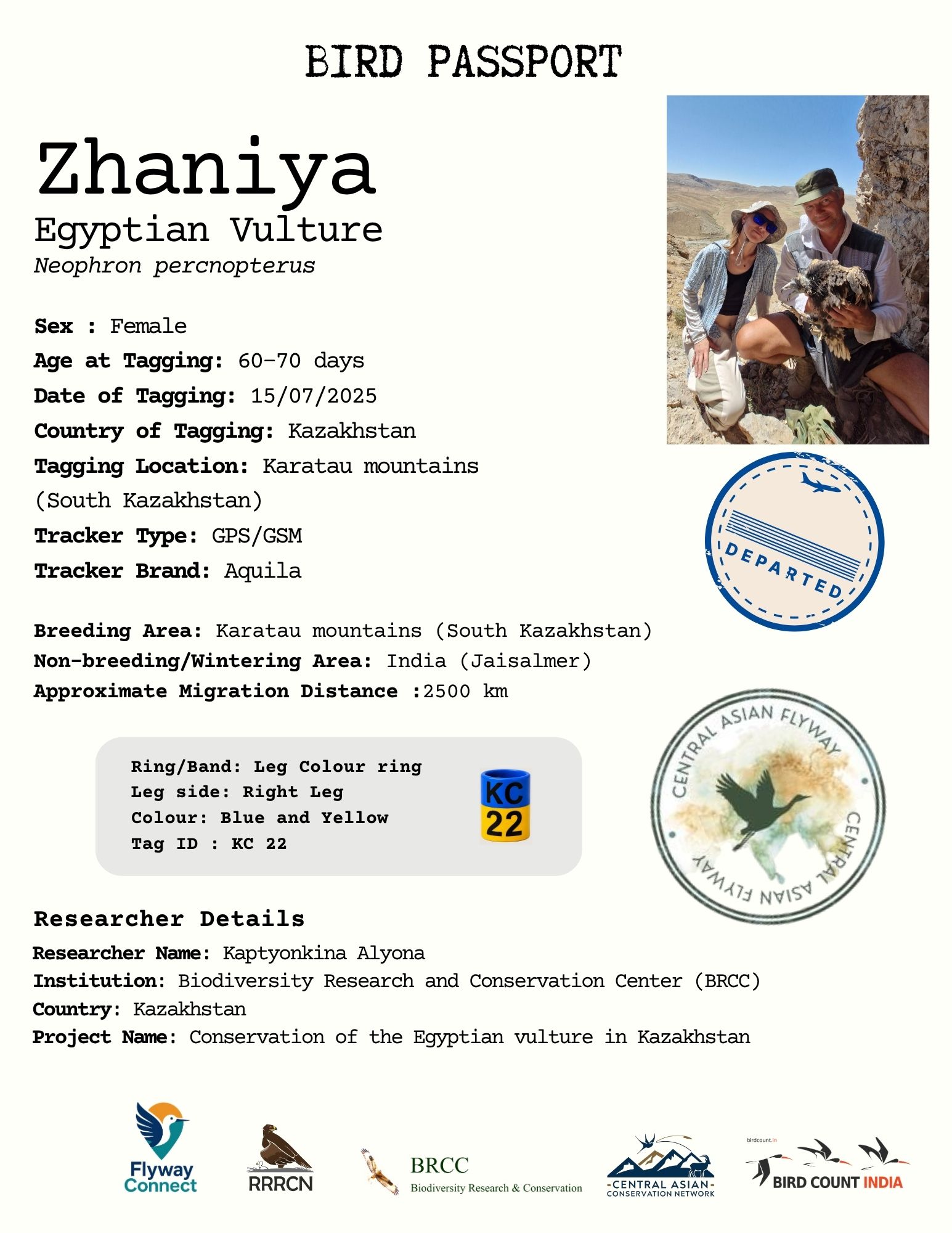 Active
Zhaniya
Bird locations
The map shows one delayed daily public location for each bird. Historical tracking data is not displayed publicly in this phase.