About this species
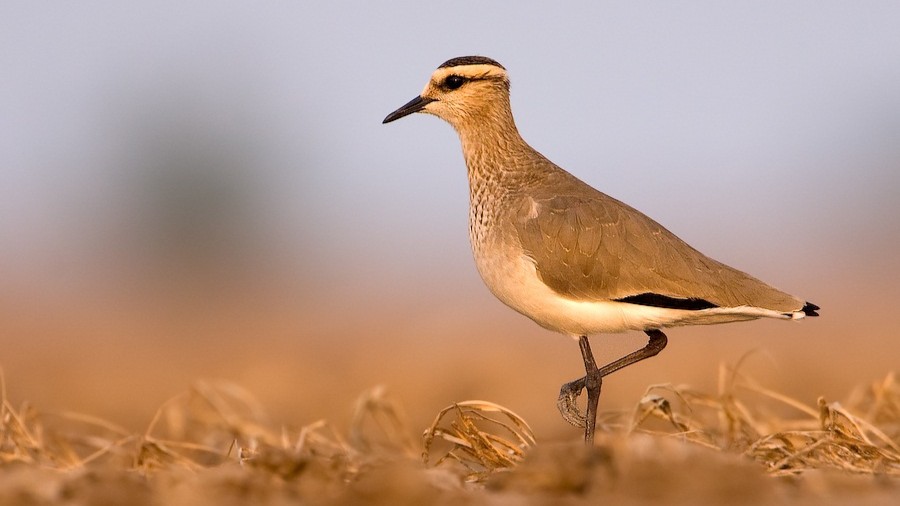
The Sociable Lapwing (Vanellus gregarius) is a medium-sized migratory shorebird of the Eurasian steppes. Within the Central Asian Flyway (CAF), it breeds primarily in the steppes of northern Kazakhstan and southern Russia, migrating through Central Asia and the Middle East to winter in Pakistan and northwestern India, with smaller numbers occurring in the Arabian Peninsula and northeast Africa. The species inhabits open steppe grasslands, sparsely vegetated plains, cultivated fields, and grazed pastures during breeding, and dry grasslands, agricultural fields, and fallow lands during migration and winter. It feeds mainly on insects and other invertebrates, supplemented by small amounts of plant material, and nests in shallow ground scrapes in open habitats. Globally classified as Critically Endangered, the species has undergone severe population declines due to habitat degradation and changes in grazing regimes on the breeding grounds, agricultural intensification, hunting along migration routes, and the loss of suitable stopover habitats, highlighting the need for coordinated conservation across the Central Asian Flyway.