About this species
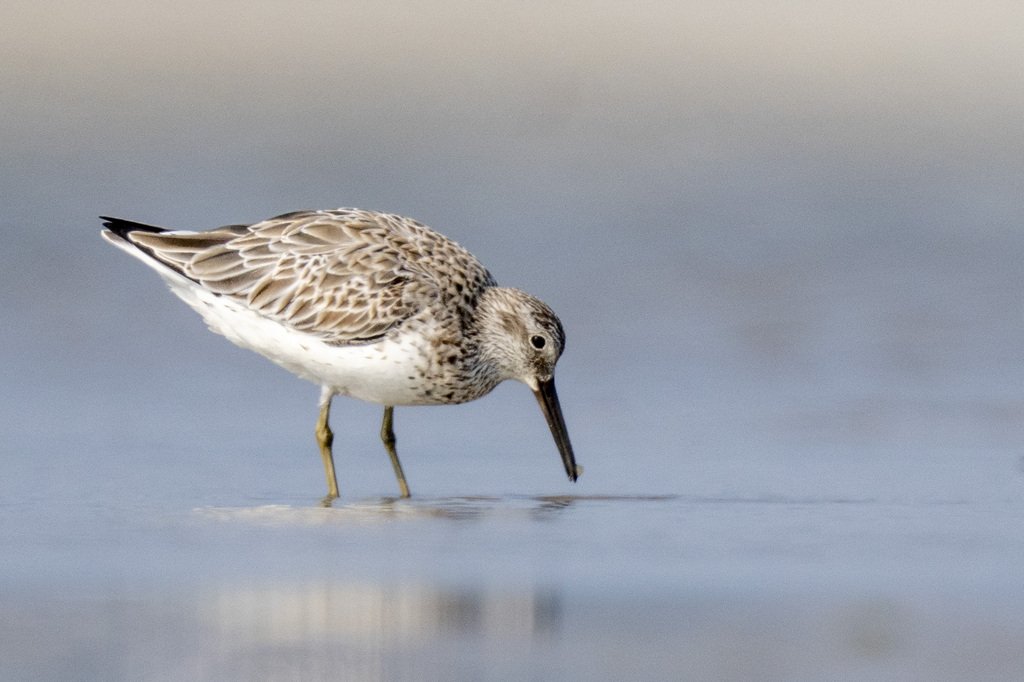
The Great Knot (Calidris tenuirostris) is a large migratory shorebird that breeds in the mountainous tundra of northeastern Siberia. Within the Central Asian Flyway (CAF), a small proportion of the population migrates through Central Asia to winter in Pakistan, northwestern and peninsular India, and the Arabian Peninsula, although most birds use the East Asian–Australasian Flyway to winter in Southeast Asia and Australia. The species breeds in alpine tundra and, during migration and winter, inhabits intertidal mudflats, estuaries, coastal lagoons, sandflats, and sheltered bays. It feeds primarily on bivalves, gastropods, crustaceans, polychaete worms, and other benthic invertebrates by probing soft sediments. Globally classified as Endangered, the species has undergone rapid population declines due to the loss and degradation of intertidal habitats at key migratory staging sites, particularly in the Yellow Sea, as well as human disturbance and the impacts of climate change on its breeding range.