Siberian Crane (Leucogeranus leucogeranus)
All species
CR· Critically Endangered
Gruidae· Gruiformes

Siberian Crane

Leucogeranus leucogeranus

One of the most endangered crane species in the world. The western/central population that once wintered in India and Iran is functionally extinct; the eastern population survives in China after migrating from Arctic Russia.

Russia Kazakhstan Uzbekistan China India Iran

About this species

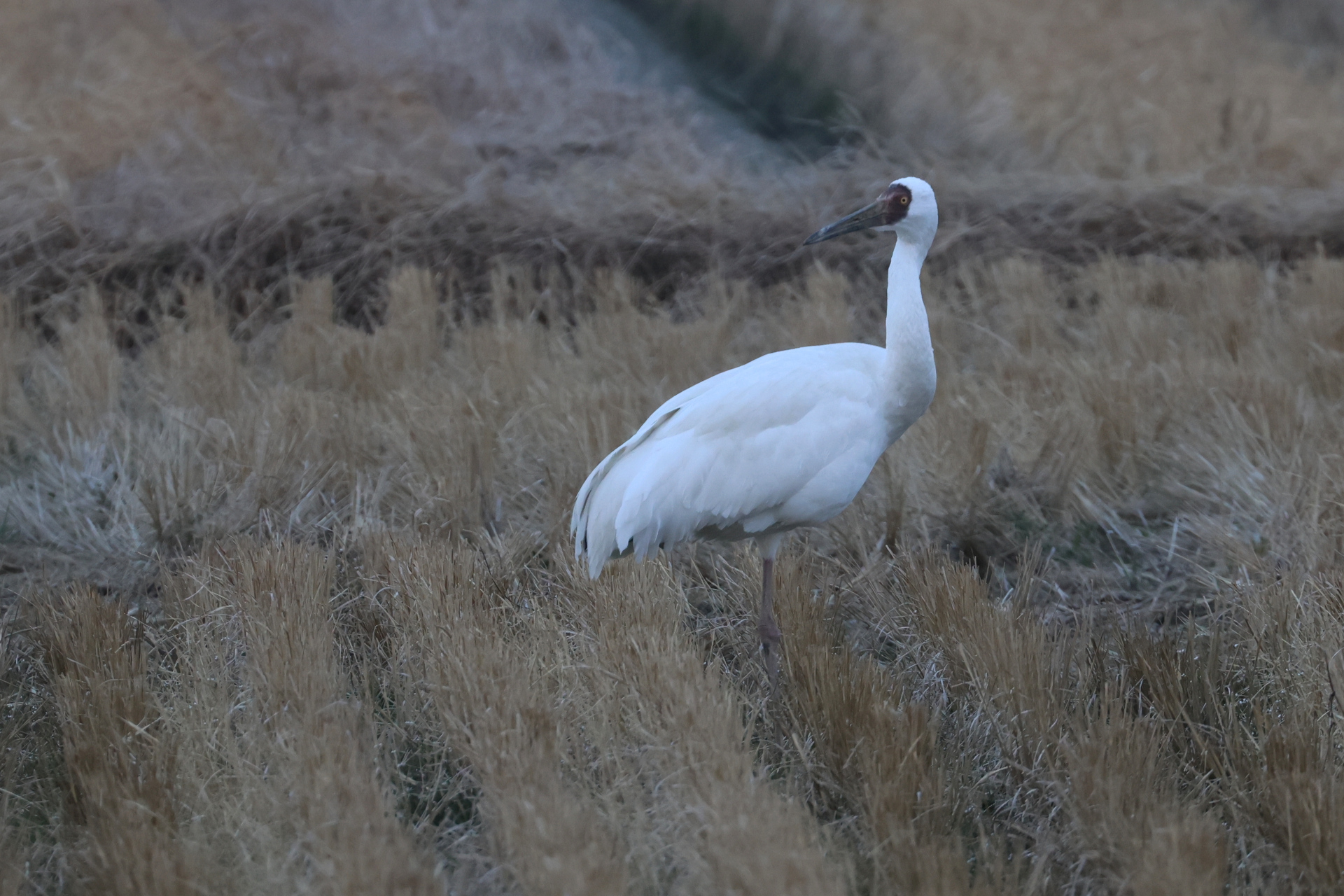
The Siberian Crane (Leucogeranus leucogeranus) is a large, almost entirely white crane with a striking red facial mask and distinctive black primaries visible only in flight. Adults reach 135 cm in height and have a wingspan of more than 2 metres. The species is highly specialised, spending most of its life in shallow freshwater wetlands where it feeds on tubers, sedges, fish and invertebrates. It breeds in the tundra wetlands of north-eastern Siberia and was historically known for two long-distance migrations: the eastern flyway to Poyang Lake in China, and the western/central flyway to the Keoladeo National Park in India. Only the eastern population (~3,500–4,000 birds) now survives in the wild. The last wild Siberian Crane recorded in India was in 2002.

Range & migration

Breeding range

Arctic tundra wetlands of north-eastern Yakutia (eastern population) and historically the Ob River basin in western Siberia.

Wintering range

Shallow lakes and wetlands of the middle and lower Yangtze River, especially Poyang Lake, China. Historically also Keoladeo (India) and Fereydoon Kenar (Iran).

Migration pattern

Long-distance Arctic–temperate migrant. The surviving eastern population travels ~5,100 km between north-eastern Yakutia and Poyang Lake. The western/central migrations through Central Asia are historical.

Population in the CAF

~3,500–4,000 mature individuals (global); western/central population functionally extinct

Habitat

Shallow freshwater wetlands: sedge meadows, marshes and lake edges; highly dependent on specific water levels for foraging.

Threats

Wetland loss and degradation along migration routes; hunting and poaching (historical); hydrological changes at key sites such as Poyang Lake; disturbance and pollution.

Conservation actions

Coordinated under the CMS Siberian Crane MoU with tri-lateral work between Russia, China, and Central Asian range states. Ongoing Arctic breeding site protection, staging site monitoring, satellite tracking, and captive breeding by ICF and Oka Crane Breeding Centre for possible reintroduction.

Key sites

  • Kunovat River, Russia (breeding)
  • Kulykol and Tyuntyugur Lakes, Kazakhstan (staging)
  • Poyang Lake, China (wintering)
  • Keoladeo National Park, India (historical wintering)