About this species
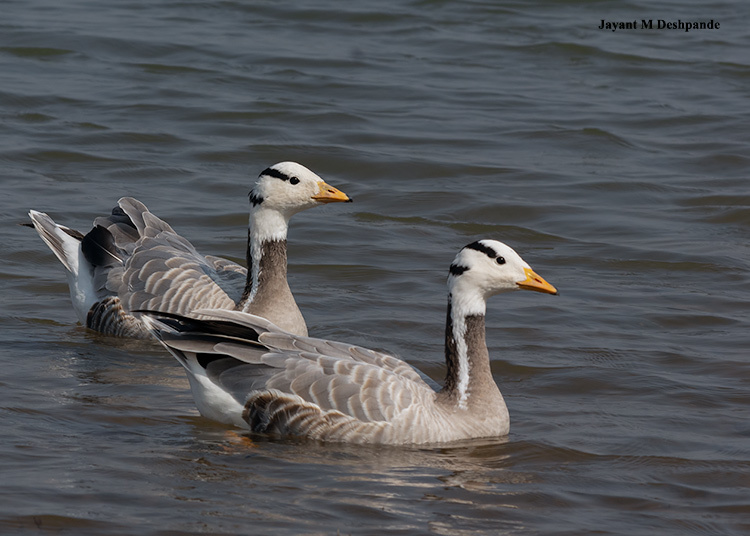
The Bar-headed Goose (Anser indicus) is a distinctive high-altitude migratory waterbird whose breeding and wintering range lies almost entirely within the Central Asian Flyway, extending from the wetlands and lakes of the Tibetan Plateau, Mongolia, and Central Asia to the Indian subcontinent and neighbouring countries. It is renowned for its remarkable trans-Himalayan migrations, regularly crossing some of the world's highest mountain ranges while travelling between breeding and wintering grounds. The species inhabits high-elevation freshwater wetlands during the breeding season and lowland lakes, rivers, marshes, and agricultural fields in winter, feeding primarily on grasses, sedges, aquatic vegetation, and cultivated crops. It nests colonially on islands, lake shores, cliffs, and marshes, typically laying four to six eggs, with both parents contributing to the protection of the brood. Although currently classified as Least Concern, the species faces several threats, including hunting, egg collection, habitat degradation, hydropower development, powerline collisions, and outbreaks of highly pathogenic avian influenza, highlighting the need for continued conservation of its breeding, migration, and wintering habitats. The Bar-headed Goose features in the cultural traditions of the Himalayas and the Tibetan Plateau and is revered in Indian mythology as the sacred Hamsa, symbolizing wisdom, purity, and spiritual transcendence.