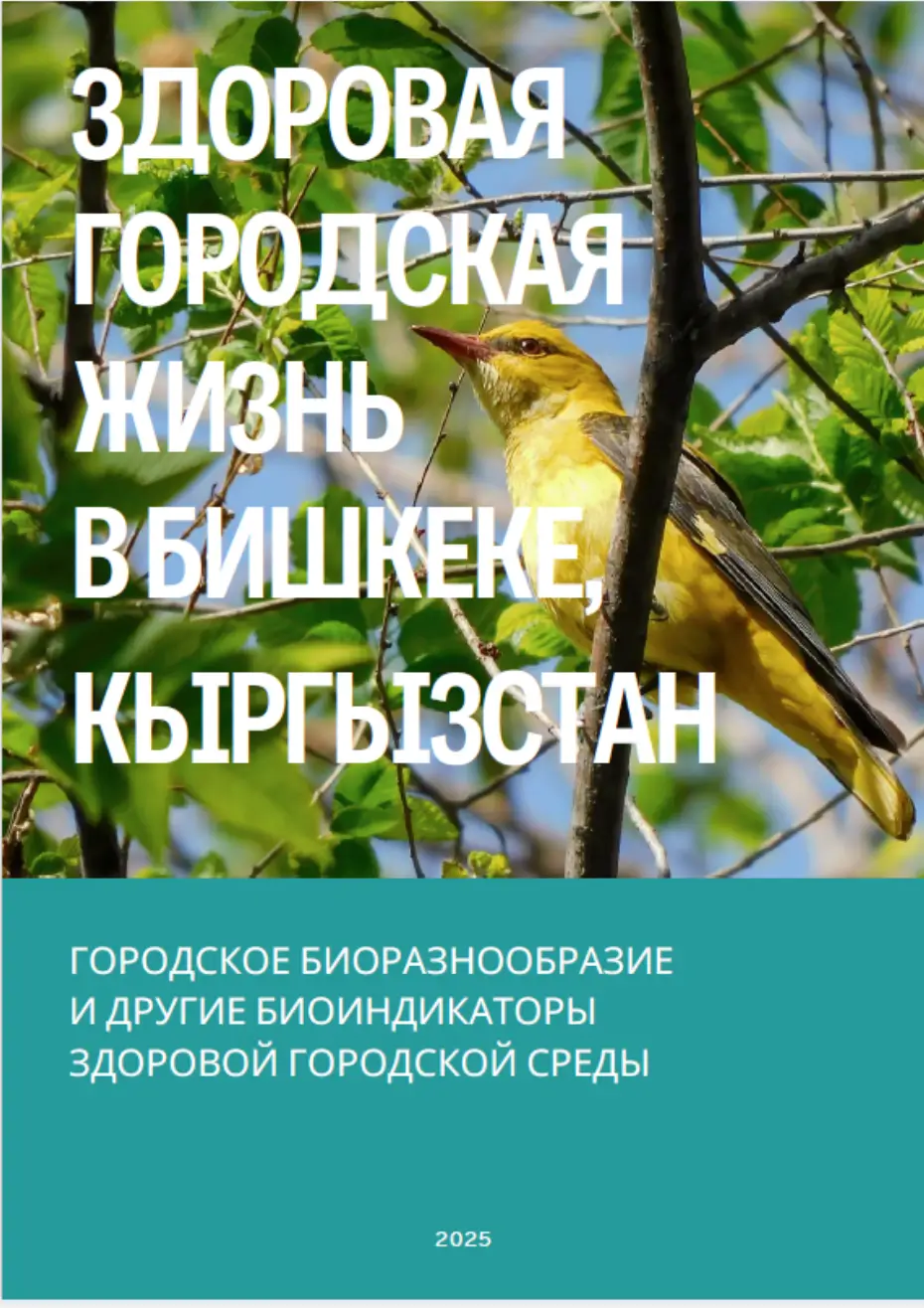
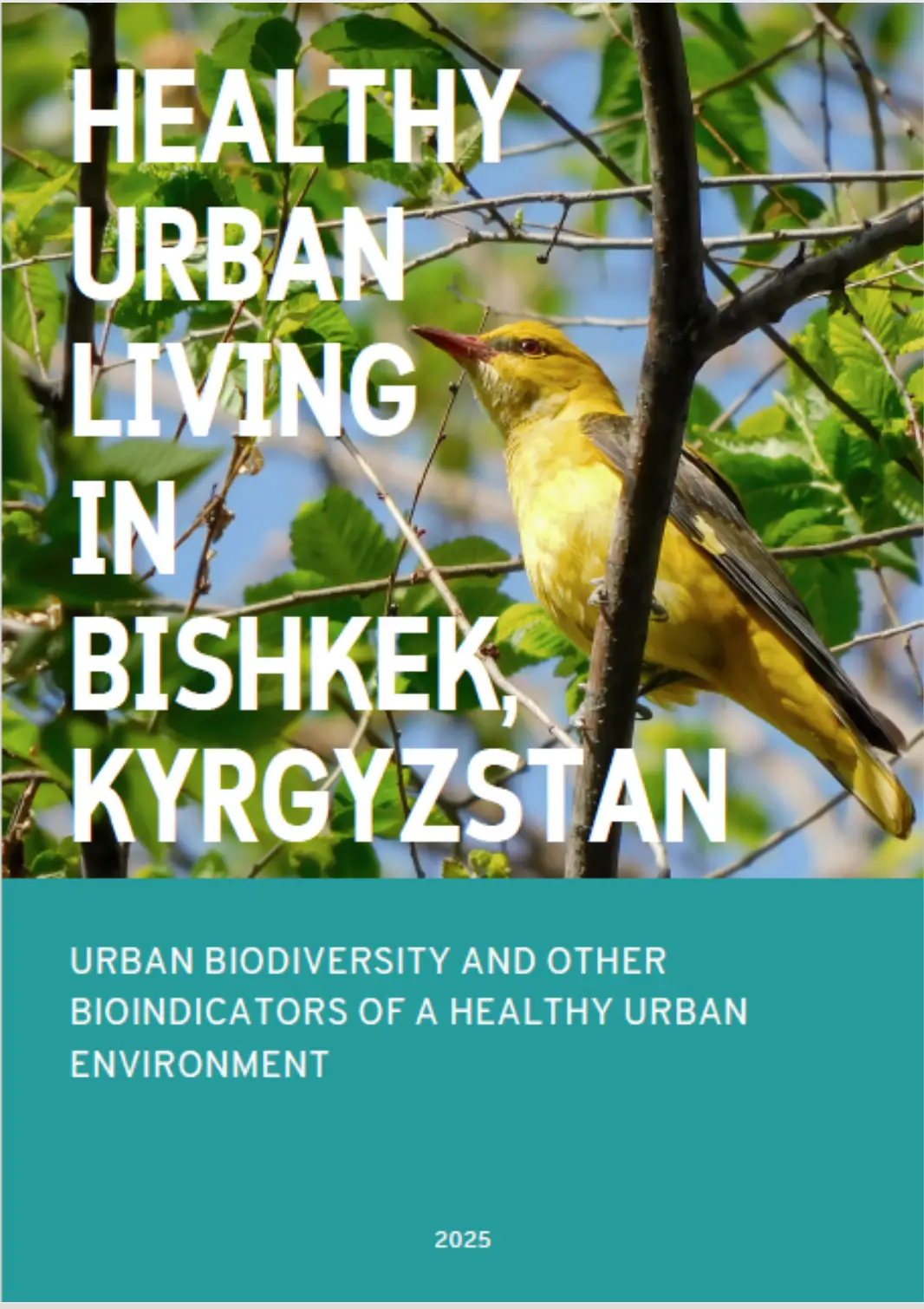
Healthy Urban Living in Bishkek: Urban biodiversity and other bioindicators of a healthy urban environment
Katherine Hall, Jeremie Berlioux
Nature Foundation
Healthy Urban Living in Bishkek: Urban biodiversity and other bioindicators of a healthy urban environment
About this resource
KEY MESSAGES This report focused on assessing Bishkek's urban environment from a nature perspective, highlighting how ecological conditions influence human health and well-being. The findings offer actionable information for decision-makers, urban planners, and citizens to integrate nature-based solutions into urban planning and management for sustainable development. The right to a clean, healthy, and sustainable environment was recognized as a human right by the UN in 2022. Urban planning and management ought to prioritise ecological health, biodiversity conservation, and citizen engagement to create inclusive, safe, resilient and sustainable cities that align with global goals such as the 2030 Sustainable Development Agenda and its Sustainable Development Goals, the Kunming-Montreal Global Biodiversity Framework, and the New Urban Agenda. City residents can be actively engaged in the urban planning and management process. They can participate as “citizen scientists”, who contribute to data collection and analysis, collaborating with traditional decision-makers to cooperatively design appropriate urban planning policies that are the most relevant for local communities. In this study, citizen scientists contributed to the data collection of bioindicators. Nature supports human health in urban settings. Urban ecosystems provide essential services like air and water purification, flood regulation, and climate control, which are vital for human health. Nature also has direct health benefits, including reducing stress, improving physical health, and enhancing mental wellbeing. Maintaining urban biodiversity is important for ensuring healthy ecosystems, and in turn, healthy human communities. Bishkek is located within the Central Asian Flyway (CAF), a migratory pathway that spans 30 countries from Siberia to the Maldives, and which supports over 600 bird species. The city itself is an important stopover, breeding and wintering site for many migratory birds. Bishkek’s diverse flora and fauna serve as bioindicators, providing visible signs of environmental conditions that can help assess ecosystem health. Plants and lichens can serve as bioindicators to assess urban air quality. Bird diversity can serve as a bioindicator for assessing ecosystem health. While these bioindicators offer valuable insights, they cannot replace official monitoring. However, bioindicators can be used as cost-effective early warning systems in support of, and alongside, official environmental monitoring. This assessment used citizen science to evaluate urban ecosystem health and healthy urban living in Bishkek through bioindicators. Clover leaf damage was used to assess the presence of ground-level ozone pollution, lichen communities were used to assess general air pollution, and bird diversity used to assess ecosystem health. Assessment of clover leaves indicated the possible presence of ground-level ozone at several locations around Bishkek. These results should be substantiated by further research and official monitoring. So-called ‘ozone gardens’ with communities of ozone-sensitive plants are used in many other countries as natural warning systems for ozone pollution and integrated into official pollution monitoring, and could also be relevant for Bishkek. Lichens observed in Bishkek were species generally tolerant of air pollution, suggesting the presence of air pollution in Bishkek, in line with previous studies and official monitoring data. Lichen communities in Bishkek and Ala Archa National Park differed dramatically, with more diverse lichen communities in the national park suggesting lower levels of air pollution than in the city. These results suggest that lichens may be valuable as bioindicators of air pollution in Bishkek. High bird diversity, especially the presence of wild species, indicates a healthy environment that supports robust ecosystem services, contributing to human well-being. In contrast, the dominance of invasive species like the Common Myna and Rock Dove signals ecological degradation and the loss of natural habitat, highlighting the importance of preserving biodiverse green spaces. Urbanization, especially the construction of 'green deserts' with homogenous vegetation, was seen to negatively impact bird diversity in Bishkek. Spaces like Park Yntymak, with sparse vegetation, attract mostly invasive species, while parks with rich, layered vegetation like Park Ataturk support diverse bird species and provide crucial ecosystem services, such as mitigating the urban heat island effect and improving air quality. Invasive species, such as the Common Myna and Rock Dove, thrive in anthropogenic landscapes, relying on human activities for food and shelter. Their high presence in built-up areas. Bishkek indicates artificial environments that lack the capacity to support local biodiversity, emphasizing the need for enhanced